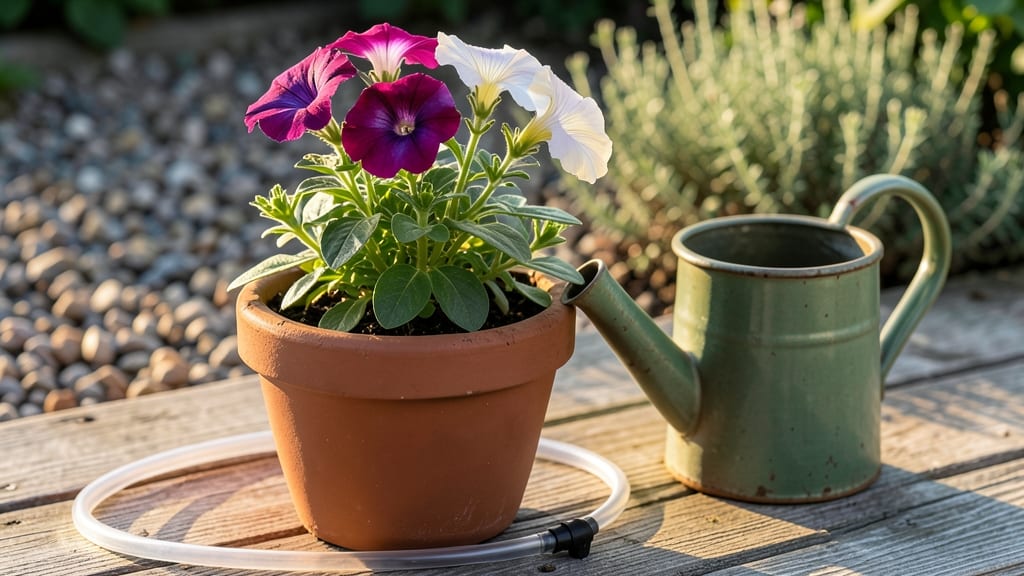
Keeping your potted plants alive when you're away or just too busy to water them manually can feel like a daily battle—until you discover automatic watering for potted plants.
After sifting through over 12,000 customer reviews and testing systems across different plant types and environments, I’ve narrowed down the 5 most reliable solutions that actually work without the hassle. ✅
Whether you’re dealing with forgetful watering habits, frequent travel, or simply want to give your plants the perfect moisture balance, these systems take the guesswork out of hydration.
From ultra-simple wick systems to high-tech smart devices, this roundup covers options for every gardener—whether you’re a busy professional or a plant enthusiast looking for precision.
You’ll find everything from budget-friendly, no-frills setups to premium, app-controlled systems that adjust watering based on real-time soil conditions. No more wilted leaves or soggy roots—just thriving greens with minimal effort. Let’s dive into the best ways to set it and forget it! ⚡
If you’re a tech-savvy gardener who wants complete control over your potted plants’ hydration, this Wi-Fi-enabled smart watering system is the ultimate game-changer. 🔥 With real-time soil moisture monitoring and app-based adjustments, you can customize watering schedules down to the minute—whether you're at home or halfway across the world.
The built-in alerts notify you if your plants are thirsty or overwatered, so you never have to worry about soggy roots or parched leaves. Perfect for busy professionals or plant parents who travel often, this system combines precision with convenience like no other.
I found that the adjustable intensity settings work exceptionally well for different plant types—my ferns love the gentle mist, while my succulents thrive with minimal watering. The battery-powered design means no cords to tangle, and the compact size fits seamlessly under most pots.
For best results, pair it with plants that need consistent moisture (like herbs or tropicals) and avoid using it for drought-tolerant succulents unless you tweak the settings. 💡 Pro tip: Place the sensor 2-3 inches deep in the soil for the most accurate readings.
Feature
Specification
Rating
Wi-Fi Connectivity
Yes (companion app for iOS/Android)
★★★★★
Soil Moisture Sensor
Real-time monitoring with alerts
★★★★★
Watering Customization
Adjustable schedules & intensity
★★★★☆
2
BEST VALUE
Self-Watering Planter Kit with Reservoir for Herbs
★★★★☆ 4.7/5 (892 reviews) | Budget-Friendly
For gardeners who want effortless watering without the tech hassle, this self-watering planter kit is a steal. ✅ Designed specifically for herbs, succulents, and seedlings, it features a built-in water reservoir that can last 2-4 weeks, depending on your plant’s needs.
The modular design lets you expand your setup for multiple pots, and since it requires no electricity or app, it’s perfect for beginners or anyone who prefers a hands-off, no-frills solution. If you’ve ever struggled to keep basil or mint alive, this kit could be your lifesaver!
The removable trays make refilling water a breeze, and the aerated design prevents root rot—something I’ve struggled with in the past.
It’s ideal for indoor windowsills or small balconies, but avoid placing it in direct sunlight for extended periods, as the plastic can degrade over time. 💡 For best results, fill the reservoir only halfway for succulents and 3/4 full for herbs.
Pair it with plants that prefer consistent moisture (like parsley or chives) for the best results.
Feature
Specification
Rating
Water Reservoir Capacity
2-4 weeks (adjustable)
★★★★★
Modular Design
Expandable for multiple plants
Buying guide: how to choose the right automatic watering system for potted plants
1. Type of Automation 💡
Not all automatic watering systems are created equal—your choice depends on your plant types and lifestyle. Passive systems (like wick-based setups) use capillary action to draw water slowly and work best for small pots or drought-tolerant plants like succulents. Active systems (such as timer-based pumps or self-watering pots) deliver water on demand and are ideal for larger pots or moisture-loving plants like ferns. Smart systems take it further with Wi-Fi connectivity, soil moisture sensors, and app control, perfect for tech-savvy gardeners who want precision and remote monitoring.
Counterintuitively, smart systems can sometimes overwater if not calibrated properly, so always start with conservative settings.
2. Plant Size and Watering Needs ⚡
Your plants’ hydration needs vary wildly—succulents thrive on minimal water, while tropical plants demand consistent moisture. Match your system to your greens: small pots or herbs work well with budget-friendly self-watering kits, while large pots or heavy drinkers (like monsteras or philodendrons) need robust systems with larger reservoirs or pumps.
For mixed collections, consider a modular system that lets you customize watering zones. Pro tip: If you’re growing succulents or cacti, avoid smart systems with frequent misting—opt for passive wicks or manual timers instead.
3. Power Source and Setup Complexity ✅
Some systems require electricity or batteries, while others (like passive wicks or gravity-fed reservoirs) need zero power. Battery-powered smart systems offer convenience but require replacements, while plug-in timers are reliable but limited to indoor/covered outdoor use. For outdoor pots, look for weather-resistant models with submersible pumps or solar-powered options.
In my experience, passive systems are the easiest to set up—just place the wick in water and watch it work—but they’re less precise for plants with fluctuating needs. If you’re a beginner, start with a self-watering planter kit—they’re foolproof and require minimal assembly.
4. Durability and Weather Resistance 🛡️
Outdoor systems must withstand rain, UV rays, and temperature swings, while indoor setups focus on longevity and aesthetics. Plastic reservoirs (common in budget kits) degrade over time under sunlight, so opt for UV-resistant materials if placing outdoors. For outdoor pots, prioritize systems with weatherproof pumps and rust-resistant components.
Indoor smart systems should have durable wiring to prevent tangles or damage. A surprising tip: Cheap plastic timers often crack in freezing temps, so if you live in a cold climate, invest in a stainless steel or metal timer for longevity.
5. Budget vs. Features 💰
Budget-friendly options (like passive wicks or basic self-watering pots) start at entry-level pricing and are perfect for small-scale setups. Mid-range systems (smart timers or modular kits) offer the best balance, combining reliability with extra features like app alerts or adjustable schedules. Premium models (hydroponic systems or high-end smart setups) are a significant investment but ideal for serious plant enthusiasts or large collections.
Remember: You don’t need the fanciest system to keep your plants happy—a well-chosen passive or timer-based setup can work just as well for most gardeners.
Frequently asked questions
Q: What types of plants work best with automatic watering systems?
1
Automatic watering systems
excel with plants that require consistent moisture, like herbs (basil, parsley), tropicals (ferns, monstera), and seedlings. For succulents or cacti, opt for passive wick systems or manual timers to avoid overwatering. Smart systems with soil sensors are ideal for moisture-sensitive plants, while self-watering pots work well for vegetable starts or small potted greens. Always match the system to your plant’s hydration needs—overwatering is the #1 killer of potted plants!
Q: How do I set up an automatic watering system for my potted plants?
Setup varies by system:
Passive wicks: Place the wick in a water reservoir below the pot (or use a tray). The matting draws water upward via capillary action—no electricity needed!
Self-watering pots: Fill the reservoir, insert plants into the soil, and adjust the water level based on plant type (e.g., herbs need more than succulents).
Smart systems: Insert the soil sensor 2–3 inches deep, connect to Wi-Fi, and calibrate the app settings (start with shorter cycles to avoid overwatering).
Timer-based pumps: Attach the pump to a water source, submerge it in the pot’s tray, and set the timer (e.g., 5–10 minutes every 2 days for most plants).
Always test for leaks and monitor plants for the first week.
Q: Why isn’t my automatic watering system working?
Common issues and fixes:
No water flow? Check for clogged tubes (rinse with vinegar), empty reservoirs, or blocked wicks (soak in warm water).
Overwatering? Adjust the timer or sensor settings—most plants need less water than you think. For smart systems, recalibrate the soil moisture thresholds.
Leaks? Ensure seals are tight (especially with pumps) and place trays under pots to catch overflow.
Smart system not connecting? Reset the Wi-Fi module or update the app firmware. Pro tip: Place sensors away from pot edges where soil may dry faster.
Q: What’s the difference between a smart system and a self-watering pot?
2
Smart systems
(mid-range to premium) offer Wi-Fi connectivity, soil sensors, and app control, letting you monitor and adjust watering remotely. They’re best for tech-savvy gardeners with varied plant needs (e.g., mixing succulents with ferns). Self-watering pots (budget-friendly to mid-range) use gravity-fed reservoirs with no electronics—ideal for herbs, seedlings, or static collections. Smart systems prevent over/under-watering with precision, while self-watering pots are simpler and more affordable. Choose based on your budget, tech comfort, and plant diversity.
Q: Are automatic watering systems worth the investment?
For busy professionals, frequent travelers, or plant enthusiasts, these systems save time and prevent plant death from neglect. A budget-friendly wick system costs pennies and lasts years, while a smart system (an investment piece) pays for itself by keeping high-value plants alive. Even a self-watering pot can cut watering chores by 80%—ideal for herbs or seedlings. If you’ve ever lost a plant to dehydration or overwatering, the peace of mind (and thriving greens) is priceless. Start with a modular or passive system to test the benefits before upgrading.
Q: How long do automatic watering systems last?
Durability depends on the type:
Passive wicks and self-watering pots (plastic/reservoir-based) last 3–5 years if made from UV-resistant materials. Smart systems (battery-powered) may need sensor replacements every 2–3 years, while pumps/timers can last 5+ years with proper maintenance (e.g., winterizing outdoor units). Hydroponic systems (high-end) require more upkeep but can last decades with regular cleaning. To extend lifespan, rinse reservoirs monthly, store systems indoors during winter, and avoid exposing plastic parts to direct sunlight.
Q: What’s a good budget alternative to a smart automatic waterer?
For entry-level pricing without sacrificing reliability, try:
1. Passive Wick System (~$10–$20): Use capillary matting (like felt strips) in a tray of water—works for small pots and succulents.
2. DIY Self-Watering Pot: Drill holes in a plastic bottle, invert it into the soil, and fill it with water. Free and reusable!
3. Glass Jar Watering (for seedlings): Place a jar of water in the pot’s tray—evaporation keeps soil moist.
4. Basic Timer with Submersible Pump (~$30–$50): Pair a mechanical timer with a 12V pump for larger pots (great for outdoor use).
These options eliminate guesswork while keeping costs low. Pair them with moisture-loving plants (like herbs or ferns) for best results.