
Watering
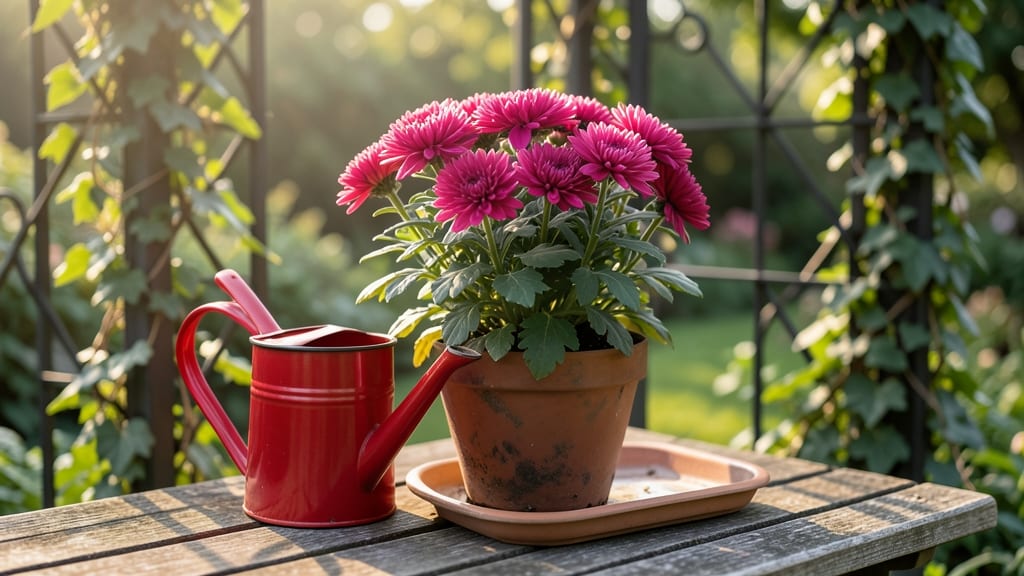
Potted mums need about 1 cup of water every 2-3 days in 10-inch pots, but the real secret is checking soil moisture before you water—dry topsoil means it's time, while soggy soil spells trouble.
Picture this: your 🌼 mums are the centerpiece of your porch, but you’re guessing whether they need a drink or a rescue. Too much water, and their roots drown; too little, and those vibrant blooms droop faster than a summer afternoon.
The fix? A simple finger test and a few seasonal tweaks that keep your mums thriving all fall long.
Most gardeners overwater potted plants without realizing it—yet mums are surprisingly resilient once you get their watering rhythm right. We’ll break down exactly how often to water, what to watch for (yellow leaves are a red flag), and how to adjust when summer heat or winter chill rolls in.
By the end, you’ll know the exact watering schedule your mums crave, plus pro tips to make their blooms last longer. No more guesswork, just happy, healthy 🌼 mums that steal the show.
The perfect watering schedule for potted mums by season
Potted mums (Chrysanthemums) thrive when given the right amount of water—but their needs change dramatically with the seasons. Too much water causes root rot, while too little leads to wilting blooms.
The key is understanding how temperature, humidity, and sunlight affect their moisture requirements. For example, a 10-inch pot might need 1 cup of water in summer but only every 7-10 days in winter.
Start by checking the top 1-2 inches of soil with your finger. If it feels dry, it's time to water. In spring and fall, aim for consistent moisture without soggy soil, while summer heat demands more frequent, shallow watering.
Winter slows everything down, so reduce watering to bi-weekly checks unless your home stays very warm.
| Season | Watering Frequency | Depth per Watering | Best Time | Container Adjustments |
|---|---|---|---|---|
| Spring | Every 2-3 days | Until water runs out drainage holes | Morning (6-9 AM) | Smaller pots dry faster |
| Summer | Daily (light watering) | Top 1-2 inches only | Early morning or late evening | Use self-watering pots |
| Fall | Every 2-3 days | Until drainage holes release | Morning (6-9 AM) | Add mulch to retain moisture |
| Winter | Every 7-10 days | Light watering (50% capacity) | Midday (avoid frost) | Move to cooler spots |
Your container size plays a huge role in how often you water. A 5-inch pot will dry out in 1-2 days in summer, while a 12-inch pot might last 3-4 days.
Always check for drainage holes—without them, roots suffocate from excess moisture. If your pot lacks drainage, add a 2-inch layer of gravel at the bottom before planting.
In summer heat, mums need shallow, frequent watering to prevent soil from drying too quickly. Water the soil, not the leaves, to avoid fungal diseases like powdery mildew.
Use a spray nozzle or watering can with a fine rose to deliver water gently. For large containers, consider a drip irrigation system or self-watering pots to maintain even moisture.
Fall is when mums really shine, but their water needs shift as temperatures drop. Reduce watering slightly in late September to signal the plant to prepare for dormancy.
By October, most mums enter a resting phase, so only water when the top 1 inch of soil feels completely dry. This helps them store energy for next year’s blooms.
Winter care depends on your climate zone. In USDA Zone 7 and below, move potted mums to a protected location like a garage or under an eave. Water only when the soil is bone-dry, typically every 7-10 days.
If your home stays above 50°F, you can keep mums indoors near a bright window and water bi-weekly. Avoid letting them sit in cold drafts, which stresses the roots.
One of my biggest mistakes was ignoring the soil type in potted mums. Heavy, clay-based mixes hold too much moisture, while sandy soil drains too quickly. The ideal mix is 60% potting soil, 20% perlite, and 20% compost.
This blend ensures good drainage while retaining enough moisture for roots. Always use a terracotta pot for better breathability—plastic traps moisture and can lead to root rot.
Pro tip: Use a moisture meter
Signs your potted mums are thirsty (or drowned) and how to fix it
Your potted mums might look like low-maintenance stars, but they’re actually sensitive to watering mistakes. Too little water causes wilting, while too much leads to root rot and yellow leaves.
The key is consistent moisture without soggy soil, but how do you spot the signs before it’s too late?
Start by checking the soil moisture with your finger—stick it 1-2 inches deep. If it feels dry, your mums are thirsty. If it’s damp, you’re likely overwatering. Drooping stems and crispy leaf edges are classic thirst signals, while mushy stems and yellowing leaves scream "drowning!"
⚠️ callout warning
Spring/Fall: Water when top 1-2 inches of soil feels dry (every 2-3 days).
Summer: Daily light watering (morning only) to prevent drying.
Winter: Reduce to bi-weekly watering—let soil dry slightly between sessions.
Pro Tip: Use pots with drainage holes and water until it runs out the bottom!
If your mums are thirsty, water deeply until it drains from the bottom of the pot. For recovery, place them in shade for 24 hours to reduce stress. If overwatered, remove the plant from the pot, trim any mushy roots, and repot in fresh, well-draining soil.
Yellowing leaves? Check for root rot by gently pulling the plant. If roots smell foul or look black, they’re rotting. Prune affected roots and repot in sterilized soil with perlite to improve drainage. This saves your mums and prevents future issues!
Prevent future mistakes with mulch—add a 1-inch layer to retain moisture without over-saturating. Also, avoid watering at night, as damp foliage invites fungal diseases. Stick to morning watering for healthier blooms and fewer problems.
With these fixes, your potted mums will bounce back in no time. Keep an eye on their soil and leaves, and they’ll reward you with vibrant blooms all season! 🌼