
Watering
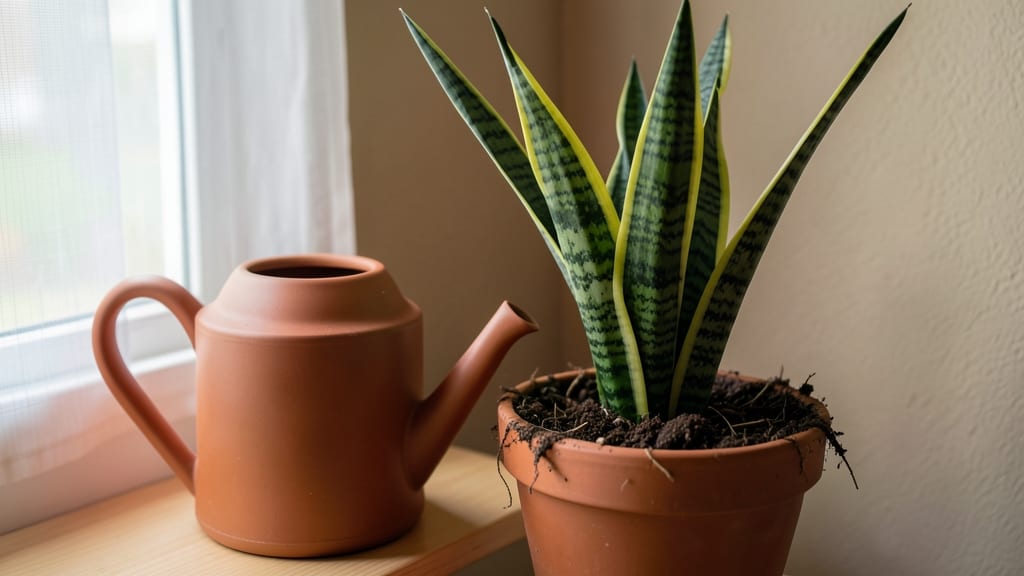
Whether you should water a plant after repotting depends on its root condition: if roots appear dry or slightly damp, give a light watering to help soil settle; if roots are wet or muddy, wait 1-3 days to avoid overwatering and root rot. Always test soil moisture before deciding.
Repotting disrupts a plant's natural moisture balance, so the right approach depends on how the roots look when you remove it from its old pot. 🌱 If roots are dry or slightly crumbly, a gentle watering helps the soil particles settle around them, reducing transplant shock.
But if roots are already saturated—often appearing dark or slimy—holding off on watering gives them time to adjust to their new environment. I've seen many gardeners make the mistake of watering immediately after repotting, which can suffocate roots and lead to rot, especially in tropical plants that prefer well-draining soil.
For most houseplants, the key is patience. After repotting, place your plant in a spot with bright, indirect light and monitor the soil's moisture level by sticking your finger about an inch deep. If it feels dry at the base, that's your cue to water lightly.
Overwatering is the biggest risk here—it creates anaerobic conditions where roots can't breathe, leading to yellowing leaves or mushy stems. Succulents and cacti are particularly sensitive, so they often need even longer to recover from repotting.
💡 In This Article
- Why Root Health Determines Post-Repotting Water Needs
- Step-by-Step Guide to Watering Newly Repotted Plants
Why root health determines post-repotting water needs
When you repot a plant, you're essentially giving its roots a fresh start—but also introducing stress. The root system, which has spent months establishing a balance with its old soil, suddenly finds itself in unfamiliar conditions.
Roots need time to adapt to the new medium, and their moisture state at this moment becomes critical. If roots appear dry or slightly crumbly when removed from the old pot, they've likely been slightly dehydrated during the transplant process.
In this case, a light watering helps the soil particles settle around the roots, creating better contact and reducing air pockets that could trap moisture and lead to rot.
The science here revolves around oxygen availability in the soil. Roots respire aerobically, meaning they need oxygen to function properly. When soil is too wet after repotting, it displaces oxygen, creating anaerobic conditions where harmful bacteria thrive.
This is especially problematic for plants like ferns or calatheas, whose roots are delicate and require well-draining soil.
On the flip side, if roots are already saturated—often appearing dark, slimy, or coated in old soil—watering immediately would exacerbate the problem by drowning them further. 🌱 The ideal scenario is to let the roots acclimate for 1-3 days, allowing excess moisture to evaporate while the plant establishes new connections with its surroundings.
Different plant types have vastly different recovery needs. Succulents and cacti, for example, store water in their leaves and stems, so their roots are adapted to dry conditions. These plants often need up to 2 weeks without water after repotting to prevent rot.
In contrast, tropical plants like monsteras or philodendrons have fibrous, moisture-loving roots that can handle a gentler approach—watering lightly after 24-48 hours if the soil feels dry. The key difference lies in their natural habitats: desert plants evolved to survive drought, while tropical plants thrive in consistently humid environments.
Transplant shock occurs when roots are physically damaged during repotting, and watering too soon can accelerate this stress. The root tips, which are responsible for absorbing water and nutrients, are particularly vulnerable. When you disturb them, they release ethylene gas—a plant hormone that signals stress.
Too much water at this stage can trigger a cascade of negative effects: softened cell walls, reduced oxygen uptake, and even the growth of pathogenic fungi.
This is why I always recommend the "finger test"—inserting your finger 1 inch deep into the soil to check moisture before deciding whether to water.
Consider the texture of the new potting mix as well. A chunky, well-draining blend (like those used for orchids or succulents) will dry out faster than a dense, peat-based mix. The latter retains moisture longer, increasing the risk of overwatering if you're not careful.
For example, a 5-inch pot filled with peat-heavy soil might take 5-7 days to dry out, while the same pot with cactus mix could dry in just 3-4 days. This variation highlights why a one-size-fits-all approach to post-repotting watering simply doesn't work.
What most people don't realize is that the root zone's temperature also plays a role. Cooler temperatures slow down microbial activity, which can be beneficial if your plant needs time to recover.
In winter, for instance, I often wait 3-5 days before watering repotted tropical plants, as the soil stays damp longer in cooler conditions. Conversely, in summer heat, the soil dries out faster, so you might need to water sooner—but still only if the roots aren't already saturated. 💧