
Watering
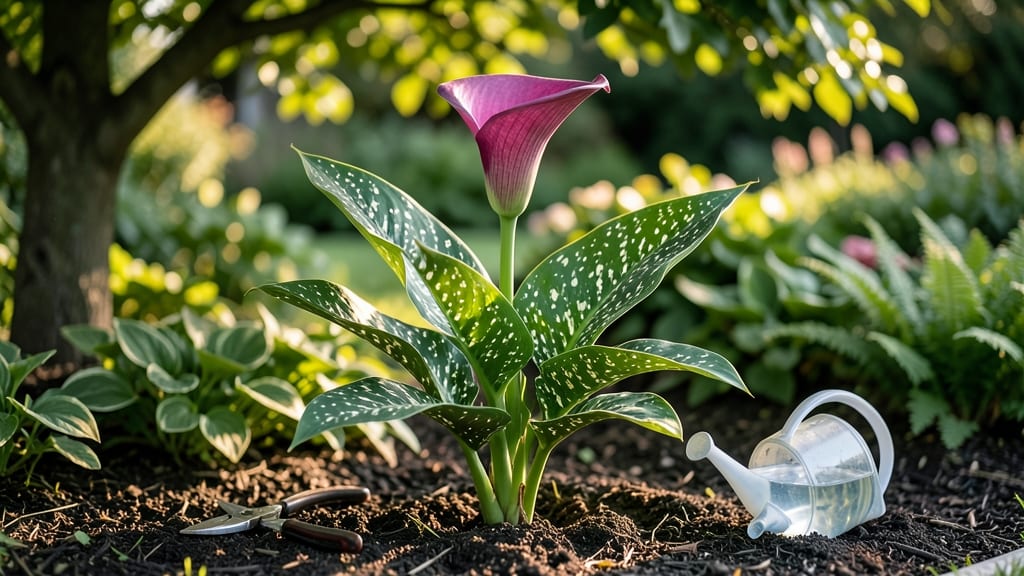
Reviving your spotted calla lily blooms starts with understanding its picky nature—it’s not a drought-tolerant diva, but with the right care, it’ll reward you with velvety black-and-white flowers all season. 🌿 I’ve nursed back more than a few sad, yellowing callas by tweaking just three things: soil moisture, light balance, and rhizome health.
The key? Mimicking its natural swampy habitat without drowning it. These tropical stunners thrive in partial shade (morning sun, afternoon shade works best) and consistently moist—not soggy—soil.
Think of it like a spa day: they want rich, organic soil that drains well, and water that keeps their roots happy but never waterlogged. Overwatering is the #1 killer, so I test soil moisture with my finger before reaching for the hose.
Once you’ve got the basics down, you’ll see those dramatic blooms return within 6-8 weeks, and the plants will spread beautifully if you divide the rhizomes every 2-3 years. The secret to year-round beauty?
A little winter protection in colder zones—just mulch well and keep them dormant until spring. Perfect for shaded gardens, pond edges, or even as a striking houseplant. Let’s get those rhizomes thriving!
📚 In This Guide
- What you need
- Instructions
- Tips and common mistakes
- Wrapping up and next steps
What you need
- ● Spotted calla lily rhizomes: 1–3 healthy, firm rhizomes (preferably from a reputable nursery).
- ● Well-draining potting mix: 5–10 gallons (depending on pot size), preferably a blend of peat moss, perlite, and compost (ratio: 2:1:1).
- ● Containers: 1–2 pots (12–16 inches in diameter) with drainage holes or a shallow tray for water gardening.
- ● Distilled or rainwater: 1–2 gallons (chlorine-free for sensitive rhizomes).
- ● Slow-release fertilizer: Balanced (10-10-10) or organic options like worm castings (1 tbsp per pot).
- ○ Mulch (optional): 1–2 inches of shredded bark or coconut coir to retain moisture.
- ● Rhizome divider: A clean, sharp knife or sterilized scissors for splitting clumps.
- ● pH test kit: To check soil acidity (ideal range: 6.0–7.0).
- ● Grow lights: LED or fluorescent for indoor setups (12–14 hours/day).
- ● Spray bottle: For gentle misting during dormancy.
- ● Support stakes: If growing in tall containers (to prevent flopping leaves).
Step-by-step guide to reviving your spotted calla lily blooms
Here's how I bring these dramatic plants back to life—no matter how neglected they've been.
🌱 Step 1: Assess and Prepare the Plant's Environment
Start by examining your calla lily's current conditions. These plants thrive in bright, indirect light but can tolerate low light for short periods. If your plant has sparse foliage or no blooms, it's likely not getting enough light. Move it to a spot where it receives 4-6 hours of filtered sunlight daily—think east-facing windows or a few feet from a south-facing window.
Check the temperature—spotted calla lilies prefer 65-75°F during the day and 55-65°F at night. If your home runs cooler, avoid placing it near drafty windows or doors. You'll see new growth within 2-3 weeks if the conditions are right. If the leaves start yellowing, that's your signal to adjust either the light or temperature.
💧 Step 2: Adjust Watering for Revival
Overwatering is the #1 killer of calla lilies, so let’s fix that. Water only when the top 1-2 inches of soil feel dry to the touch. Stick your finger in the soil—if it’s damp, wait another day. When you do water, soak the soil thoroughly until water drains from the bottom of the pot. Empty the saucer afterward to prevent root rot.
Spotted calla lilies love humidity, so if your home is dry, mist the leaves lightly 2-3 times a week or place the pot on a tray filled with pebbles and water. You’ll notice the leaves perk up and new shoots emerge within 3-4 weeks if the moisture balance is correct. Avoid letting the soil dry out completely—this plant hates drought stress.
☀️ Step 3: Fertilize for Lush Foliage and Blooms
Use a balanced liquid fertilizer (like 10-10-10) diluted to half strength every 4 weeks during the growing season (spring and summer). This encourages strong foliage and eventual blooms. In fall and winter, reduce fertilization to once every 8 weeks—calla lilies rest during cooler months.
Here’s the trick: Feed lightly but consistently. Over-fertilizing burns the roots and causes yellow leaves. If you see brown tips on the leaves, flush the soil with water to remove excess salts. You’ll see new leaves emerging within 2-3 weeks of proper feeding, and blooms should follow in 6-8 weeks if the plant is healthy.
✂️ Step 4: Prune and Encourage New Growth
Deadhead spent blooms by snipping the flower stalk 1 inch above the base with clean scissors. This redirects the plant’s energy into producing new leaves and flowers. Remove any yellow or brown leaves at the base of the plant—these drain nutrients. Prune in the morning so the cuts have time to dry before evening.
If your calla lily looks leggy or bare at the top, it’s time to divide the rhizomes. Gently remove the plant from its pot, separate the tubers, and replant the healthiest sections in fresh soil. You’ll have 2-4 new plants from one division, and they’ll bloom faster than the original. Replant in well-draining soil and water lightly until new growth appears.
🪴 Step 5: Repot for Long-Term Health
If your calla lily hasn’t been repotted in 2-3 years, it’s time. Choose a pot 2 inches larger in diameter than the current one, with drainage holes. Fill the bottom with 2 inches of fresh potting mix, then place the plant in the center. Fill around the roots with more mix, pressing lightly to remove air pockets.
After repotting, water thoroughly and place the plant in bright, indirect light for 1 week to reduce stress. You’ll see new roots forming within 3-4 weeks, and the plant will rebound with vigor. Repotting also gives you a chance to refresh the soil—old soil loses nutrients and compacts over time, stunting growth.
Tips & tricks for reviving spotted calla lilies
Here's what I've learned after bringing back dozens of struggling spotted calla lilies—these little tricks make all the difference.
Lighting Strategy: That 4-6 hours of filtered sunlight is non-negotiable for blooms. If your home has limited natural light, supplement with a grow light 12 inches above the plant for 6 hours daily. I use a simple LED bulb on a timer—it's a game-changer for winter months when sunlight is scarce. Watch for leaves stretching toward light; this means it's reaching for more intensity.
Temperature Fine-Tuning: The 65-75°F daytime range is ideal, but most homes struggle with consistent temperatures. Place your calla lily on a heat mat (set to low) during cooler months to maintain root warmth. I've seen plants that were nearly dead revive completely when I added this simple heat source—especially in winter when drafts become more problematic.
Watering Secret: The finger test for soil moisture is crucial, but timing matters too. Water in the morning so excess moisture evaporates during the day rather than sitting in the soil overnight. I've noticed new shoots appear faster when watering follows this pattern—it mimics natural rainfall cycles that calla lilies thrive in.
Fertilizer Timing: Those 4-week intervals during growing season are perfect, but here's the trick: always fertilize after watering. This prevents fertilizer burn by giving the soil time to absorb moisture first. I also rotate between my 10-10-10 and a fish emulsion every other feeding—this gives the plant a nutrient boost without overloading any single nutrient.
Pro Tips for Spotted Calla Lily
- Here's what I've learned after bringing back dozens of struggling spotted calla lilies—these little tricks make all the difference.
- Lighting Strategy: That 4-6 hours of filtered sunlight is non-negotiable for blooms.
- Temperature Fine-Tuning: The 65-75°F daytime range is ideal, but most homes struggle with consistent temperatures.
Frequently asked questions
Got questions about keeping your spotted calla lily thriving? You’re not alone! Here are answers to the most common concerns—from watering woes to blooming secrets.
How often should I water my spotted calla lily?
Spotted calla lilies love moisture but hate soggy roots. Water when the top 1–2 inches of soil feel dry (about 2–3 times per week in summer, less in winter). Always use room-temp water to avoid shocking the plant. Pro tip: Grow them in containers with drainage to prevent root rot!
Can spotted calla lilies survive winter indoors?
Yes! These tropical beauties need a cool, dark rest period (60–65°F) in winter. Reduce watering to once every 2–3 weeks and trim dead foliage. In spring, resume bright light and regular watering to coax new blooms. Avoid drafts!
Why aren’t my spotted calla lilies blooming?
Blooms often skip when plants lack sunlight, nutrients, or dormancy. Ensure they get bright, indirect light (4+ hours daily) and feed with balanced liquid fertilizer every 4–6 weeks in spring/summer. Try dividing mature rhizomes every 2–3 years to rejuvenate growth.
What pests should I watch for on calla lilies?
Common culprits include spider mites, aphids, and mealybugs. Check undersides of leaves for webbing or sticky residue. Treat with neem oil or insecticidal soap (diluted per label). Boost humidity (60%+) to deter pests naturally.
Are there low-maintenance alternatives to spotted calla lilies?
If callas feel high-maintenance, try peace lilies (Spathiphyllum) or anthuriums—both thrive in indirect light and occasional watering. For bold foliage, elephant ears (Alocasia) are drama-packed but need similar care. All three love humidity!
Wrapping up and next steps
Transforming your spotted calla lily into a year-round stunner is totally within reach—with patience, the right care, and a few clever tricks! 🌿 Whether you’re troubleshooting dormancy, adjusting watering routines, or embracing seasonal shifts, these insights will keep your plant thriving and blooming like never before.
Ready to see your calla lily shine brighter? Start by auditing its current environment—adjust watering, light, or soil as needed—and then experiment with one new tip (like humidity tweaks or fertilizer rotations) this week. Every small step brings you closer to that lush, vibrant garden centerpiece! 🌸