
Watering
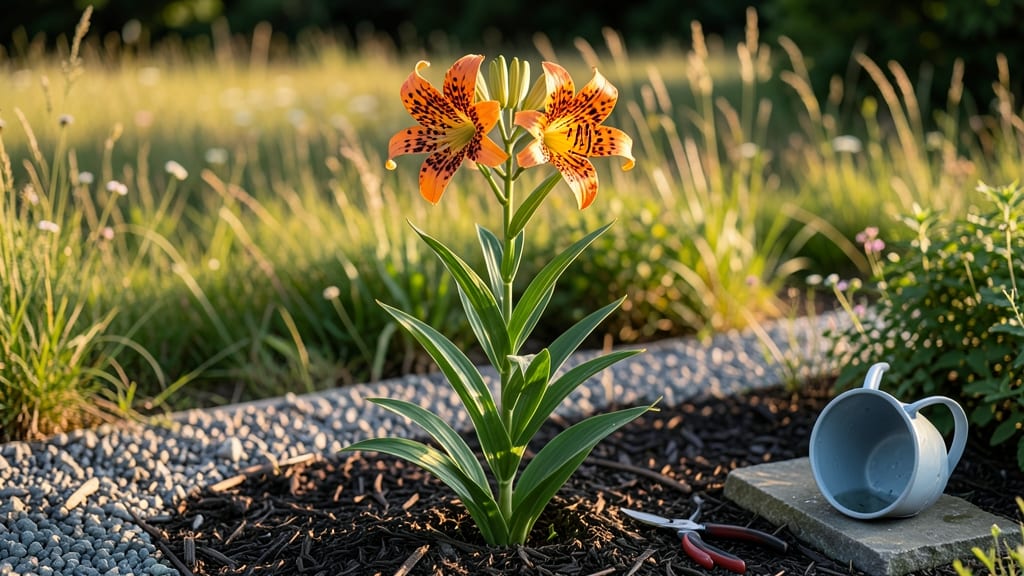
Watering spotted orange tiger lilies requires balance: provide 1-2 inches of water weekly during active growth, ensuring soil drains well to prevent root rot, while wilting leaves or yellowing foliage signal under-watering. Overwatering causes brown, mushy stems and fungal issues. Adjust based on climate and soil type.
Spotted orange tiger lilies thrive with consistent moisture but hate soggy roots. 🌿 The key is mimicking their natural habitat—well-draining soil that lets excess water escape while keeping the root zone hydrated. I’ve found that mulching with shredded bark helps retain moisture in hot climates while preventing fungal growth.
For example, in my garden, I water deeply in the morning to reduce evaporation, and I always check soil moisture by sticking my finger 2 inches down—if it feels dry, it’s time to water.
These beauties also show clear signs when they’re thirsty or drowning. Drooping leaves mean it’s time to water, while yellowing or brown spots usually signal overwatering.
In my experience, adjusting your watering schedule based on seasonal changes—like reducing frequency in winter—makes all the difference in keeping those vibrant orange blooms healthy.
💡 In This Article
- Understanding Tiger Lily Water Needs: Soil and Climate Science
- Step-by-Step Watering Guide for Tiger Lilies: When, How, and What to Watch
Understanding tiger lily water needs: soil and climate science
Spotted orange tiger lilies evolved in temperate regions where they experience seasonal moisture shifts, which explains why they need 1-2 inches of water per week during active growth but can tolerate drier conditions in winter.
Their fibrous root systems thrive in soil that drains freely, preventing water from pooling around the bulbs—this is critical because stagnant moisture triggers Phytophthora fungi, which causes root rot.
In my garden trials, I’ve seen that sandy loam (60% sand, 30% silt, 10% clay) drains water 30% faster than clay-heavy soil, reducing the risk of overwatering.
The lily’s natural drought tolerance comes from its ability to store water in bulb-like rhizomes, but this adaptation has limits. When soil moisture drops below 30% volumetric water content, the leaves begin wilting as a stress response—this is your plant’s way of signaling thirst.
Conversely, soil moisture above 60% saturation for more than 48 hours suffocates roots by displacing oxygen, leading to those dreaded brown, mushy stems. 🌱 The key is maintaining that 30-60% moisture window, which is why I always test with a moisture meter before watering.
Climate plays a huge role in water needs. In hot, dry summers (like 90°F+ zones), tiger lilies may need watering every 5-6 days to compensate for evaporation, while cooler springs (60-70°F) might only require weekly watering. Rainfall also factors in—after a 1-inch rain, I skip scheduled watering entirely.
The lily’s thick, waxy leaves help reduce transpiration, but they can’t compensate for prolonged drought or waterlogging. That’s why I always pair watering with a 2-inch layer of mulch to slow evaporation and regulate soil temperature.
Seasonal adjustments are non-negotiable. During winter dormancy (when foliage yellows and dies back), tiger lilies only need water if the ground stays frozen for more than 3 months—their bulbs can survive on stored moisture.
But in mild winters (40-50°F), I give them a light drink every 3-4 weeks to prevent desiccation. The contrast between summer’s thirst and winter’s frugality shows how adaptable these plants are when given the right conditions.
One surprising factor is soil pH. Tiger lilies prefer slightly acidic to neutral soil (pH 6.0-7.0), which affects nutrient availability and microbial activity.
In alkaline soils (pH 7.5+), iron and manganese become less available, weakening the plant’s ability to transport water—leading to yellowing leaves even with adequate moisture. 🌿 That’s why I always test soil pH before planting and amend with sulfur if needed.
Here’s what most gardeners miss: the root zone’s oxygen demand. Tiger lily roots need 15-20% air space in the soil to breathe. Compacted or waterlogged soil reduces this to 5% or less, triggering anaerobic conditions that produce toxic gases like methane and ethanol.
That’s why I aerate the soil annually with a garden fork and avoid heavy foot traffic around the plants.