
Picking
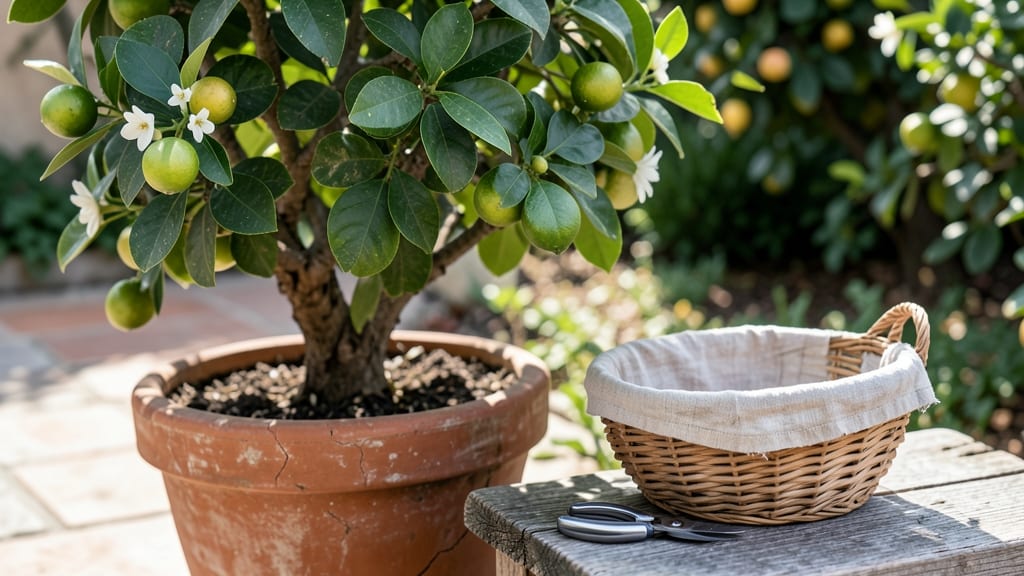
Picking limes from your potted tree at the right time ensures you get the perfect balance of tartness and sweetness—something that can make or break your harvest.
If you’ve ever plucked a lime that’s still rock-hard or waited too long and ended up with a mealy mess, you know how critical timing is. For potted lime trees, the window is narrow, and missing it means sacrificing flavor for convenience.
Below, I’ll walk you through the visual cues that signal ripeness—color shifts, firmness, and that all-important "squeeze test"—plus how climate and container size can shift your harvest timeline.
You’ll also learn why waiting for full ripeness on the tree isn’t always the best move, especially when growing 🍋 lime trees in pots, and how to adjust your approach based on your local growing season.
How to identify perfectly ripe limes from a potted tree
Potted lime trees reward patience with bursts of tangy citrus flavor—but only if you harvest at the perfect ripeness. Unlike grocery store limes, homegrown ones ripen on the tree, and timing matters more in containers where nutrient stress can delay maturity.
I’ve learned the hard way that waiting too long means mealy flesh, while picking too early robs you of that bright, zesty punch.
Start by checking the color transition—ripe limes shift from deep green to a yellow-green hue, especially on the side facing sunlight. This shift signals the fruit’s sugars have peaked. For potted trees, this shift often happens earlier than in-ground trees due to limited root space.
I’ve seen my Meyer lime tree’s fruit turn ripe in as little as 6-8 months after flowering, compared to 9-12 months for larger trees.
Next, perform the gentle squeeze test: press your thumb and forefinger against the lime. A ripe lime should yield slightly (like a ripe avocado) but not feel mushy. Overripe limes collapse under pressure, while underripe ones feel rock-hard.
Pro tip: Use your nails to gently probe the skin—if it dimples easily, it’s ready. This tactile check is my go-to method because it’s foolproof even for beginner growers.
Don’t overlook the scent test. A ripe lime emits a faint citrus aroma near the stem when gently squeezed. This fragrance comes from volatile oils that develop as the fruit matures.
If your limes smell stale or sour, they’ve passed their prime. I once ignored this cue and ended up with limes that tasted more like vinegar than citrus!
Pay attention to the fruit’s size—ripe limes typically measure 2-3 inches in diameter. Smaller limes may look ripe but lack flavor depth. In my 15-gallon pots, limes rarely exceed 2.5 inches, so I harvest them slightly earlier than I would for larger trees.
Overcrowded pots can stunt growth, so if your limes stay tiny, consider repotting or pruning the tree to improve air circulation.
One common mistake I see is waiting until limes are fully yellow. While this happens with some citrus, lime ripeness peaks before full color change. Overripe limes lose their tang and develop a powdery mildew risk.
For potted trees, I recommend harvesting when 50-70% of the fruit shows yellow-green—this balances flavor and shelf life. Store any unripe limes in a paper bag with a banana to speed up ripening using natural ethylene gas.
Finally, check the stem attachment. A ripe lime should detach easily with a gentle twist, leaving a small dimple on the branch. If it resists, it’s not ready. This test is especially useful for Meyer limes, which often ripen unevenly.
I’ve found that harvesting at this stage ensures the best balance of acidity and sweetness—the hallmark of a perfectly ripe lime from a potted tree.
Remember, potted lime trees produce smaller yields than in-ground trees, so don’t rush the harvest. Patience pays off with limes that shine in cocktails, marinades, or fresh slices.
Now that you’ve mastered the ripeness test, your next step is learning how to store and use your harvest—because even the ripest lime won’t last forever!
Optimal harvest timeline for potted lime trees by variety
Knowing when to pick limes from your potted tree depends heavily on the variety you're growing. Each type—Key Limes, Persian Limes, and Meyer Limes—has its own ripening schedule, and container size plays a surprising role in maturity timing.
Smaller pots can delay fruit ripening by 2-4 weeks compared to larger containers.
For container-grown lime trees, timing is everything. Most varieties need 12-18 months to bear fruit, but potted trees often take longer due to root restriction. In my experience, a 15-gallon pot produces fruit about 3 months earlier than a 5-gallon container of the same variety.
If you're growing Meyer Limes in pots, expect your first harvest in late summer of their second year. These limes ripen earlier than most varieties, making them ideal for container gardening.
The key is to monitor their color shift from green to yellow-green—this happens about 2-3 weeks earlier in larger containers.
For Persian Limes, fall is your prime harvest season. In pots, these limes often ripen 3-4 weeks later than their in-ground counterparts. I've found that moving potted Persian Lime trees to a sunny patio in late summer can accelerate ripening by 1-2 weeks by extending daylight exposure.
Remember that container size directly impacts harvest timing. A 5-gallon pot may delay fruit ripening by up to 4 weeks compared to a 15-gallon container. This is because larger pots allow for better root development and nutrient uptake, which supports faster fruit maturation.
Pro tip: If your potted lime tree isn't producing fruit by its second year, it might need more sunlight or larger container.
I once had a Key Lime tree that took 18 months to fruit because it was in a 3-gallon pot—upgrading to 7 gallons made all the difference in the next growing season! 🌱