Plants
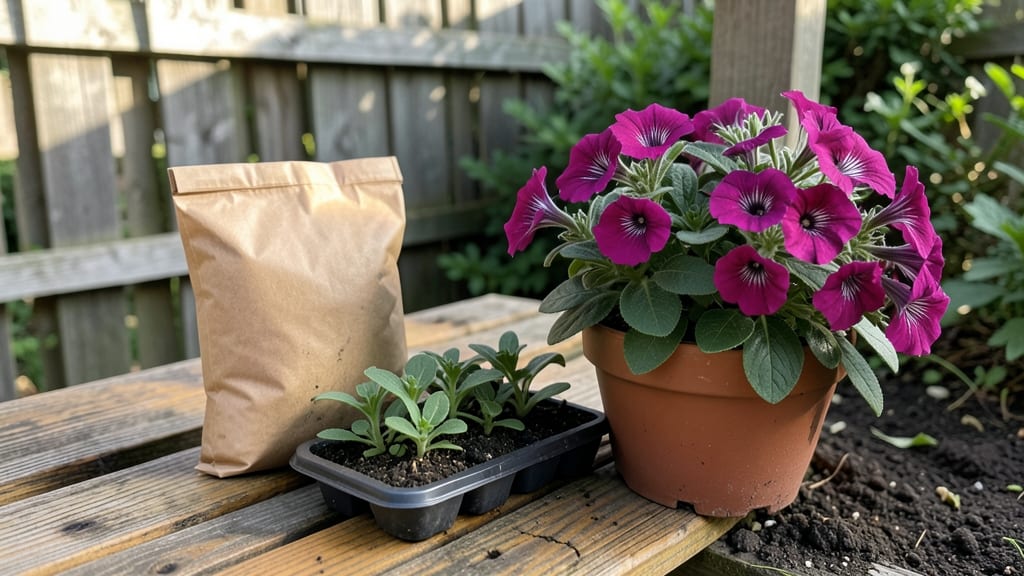
You can use indoor potting mix for outdoor plants temporarily, but it lacks proper drainage and nutrients for long-term growth, often leading to root rot and stunted plants. Mix it with compost, perlite, and native soil to improve its structure and fertility.
Indoor potting mix is designed for containers with controlled watering, but outdoor gardens face different challenges like heavy rainfall and soil compaction. 🌱 The lightweight, airy texture that works in pots can turn into a soggy mess when exposed to outdoor elements, suffocating roots.
Many gardeners make the mistake of assuming "soil is soil," but outdoor plants need a balance of organic matter, minerals, and proper drainage that potting mix simply can't provide on its own.
For temporary planting—like starting seedlings outdoors—you can use potting mix as-is, but always pair it with a well-draining base layer of sand or gravel.
The key is to amend rather than replace: blend equal parts potting mix with native soil and add 10-20% perlite or coarse sand to prevent compaction. This hybrid approach gives your plants the best of both worlds while avoiding the pitfalls of pure potting mix.
💡 In This Article
- Why Indoor Potting Mix Fails in Outdoor Gardens
- How to Adapt Indoor Potting Mix for Outdoor Planting
Why indoor potting mix fails in outdoor gardens
Indoor potting mix is engineered for containers with controlled watering and drainage, but outdoor gardens present a completely different set of challenges. The lightweight, airy composition—typically 50-70% peat or coconut coir—breaks down rapidly when exposed to rainfall, wind, and compaction forces that outdoor soil endures.
This causes the mix to lose its structure within 3-6 months, turning into a dense, waterlogged mass that suffocates roots.
The microbial ecosystem in potting mix also struggles outdoors. Indoor mixes contain sterile or pasteurized compost to prevent weeds and pests, but outdoor soil thrives on diverse microbial communities that break down organic matter and recycle nutrients.
Without this diversity, plants grown in pure potting mix often suffer from nutrient lockout, where essential elements like nitrogen and phosphorus become unavailable despite being present in the soil.
Drainage is another critical failure point. Potting mix relies on container walls to prevent waterlogging, but outdoor beds lack this boundary. When heavy rain saturates the mix, it can't escape quickly enough, creating anaerobic conditions that trigger root rot within 24-48 hours.
Compare this to native soil, which typically contains 20-30% sand or silt to facilitate drainage—something potting mix simply doesn't provide.
Even the texture becomes problematic outdoors. Potting mix is designed to stay loose in confined spaces, but when spread in garden beds, it compacts under foot traffic or machinery.
This compression reduces pore space by 40-60%, cutting off oxygen to roots and creating the perfect environment for fungal diseases like Phytophthora, which thrives in waterlogged, compacted soil.
Seasonal temperature fluctuations also play a role. Indoor mixes aren't formulated to handle the freeze-thaw cycles common in outdoor environments. The organic matter breaks down unevenly, creating hotspots that can scorch roots in summer or fail to insulate them in winter.
Native soil, on the other hand, develops a natural buffer against these extremes through years of organic buildup.
What most gardeners don't realize is that potting mix's high organic content—while ideal for container plants—can actually over-fertilize outdoors. The rapid decomposition releases nutrients too quickly, burning tender roots and creating salinity buildup that inhibits water uptake.
This is why plants in amended potting mix often show leaf scorch or stunted growth despite appearing well-watered.