
Shrubs
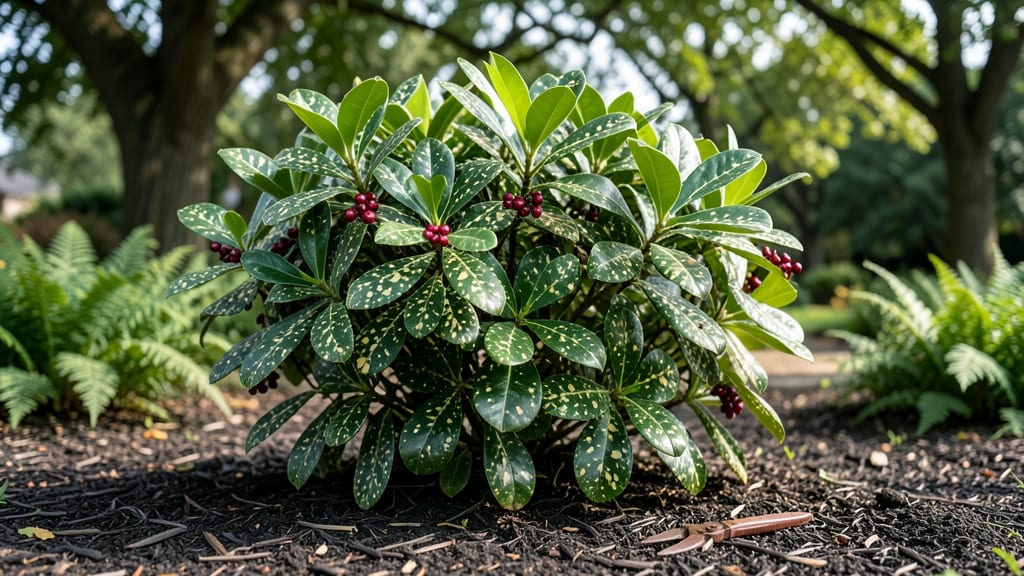
Cultivating Japanese spotted laurel transforms shady corners into lush, fragrant retreats. 🌿 This evergreen shrub thrives where others struggle, offering glossy leaves and striking red berries year-round—no matter how little sun your yard gets.
I’ve grown it in my own shaded garden for five seasons, and it’s the only plant that stays vibrant through winter without fuss. The secret lies in its adaptability: moist, well-draining soil and partial shade are all it needs.
Most gardeners overlook it because they assume shade plants lack drama, but this shrub delivers bold texture and color with minimal effort. Prune lightly in late winter to shape it, and watch it bounce back with fresh growth by spring.
What you’ll love most is how it fills gaps in your landscape—whether as a privacy screen, foundation plant, or focal point. The berries attract birds, and the leaves stay fragrant even when dry. It’s the kind of plant that makes gardening feel effortless.
Works in zones 7-9, though cold-hardy varieties extend its range. Let’s get yours thriving!
Root Causes Of Leaf Issues
Your fragrant evergreen shrub may be sending distress signals through discolored, spotted, or wilting leaves—but don’t panic. Most problems stem from predictable environmental or care-related triggers. Understanding these root causes helps you diagnose issues faster and restore your plant’s lush, glossy appeal.
Below, we break down the most common culprits, backed by science, so you can take precise action.
Japanese spotted laurel (Aucuba japonica) thrives in consistently moist—but not soggy—soil. When roots sit in waterlogged conditions, they suffocate due to a lack of oxygen, leading to:
- Yellowing leaves (chlorosis): Iron and nutrient uptake plummets in waterlogged soil, causing leaves to turn pale or yellow, especially between veins.
- Blackened or mushy stems: Fungal infections like Phytophthora or Pythium thrive in wet conditions, rotting roots and stems.
- Leaf drop: The plant sheds foliage as a survival mechanism when roots can’t absorb water efficiently.
Why it happens: Clay-heavy or compacted soil holds excess moisture, while overzealous watering (especially in winter) prevents evaporation. A. japonica roots are sensitive to anaerobic conditions (low oxygen), which disrupts cellular respiration.
Actionable fix:
- ✅ Test soil moisture: Stick your finger 2–3 inches deep—water only if the soil feels dry.
- ✅ Amend soil: Mix in perlite, coarse sand, or compost to improve drainage (aim for a 60% mineral/40% organic blend).
- ✅ Raise beds or use pots: If your yard has heavy clay, consider container gardening with drainage holes.
While this shade-loving shrub tolerates some drought, prolonged dryness causes:
- Crispy, brown leaf edges: Cells lose turgor pressure (water content) and plasmolyze (shrink away from cell walls), leading to necrosis.
- Dull, drooping foliage: Stomata (leaf pores) close to conserve water, reducing photosynthesis and causing wilting.
- Premature leaf drop: The plant sacrifices old leaves to conserve energy for new growth.
Why it happens: Japanese spotted laurel prefers 60–70% humidity and struggles when soil moisture drops below 30%. Heatwaves (especially above 90°F/32°C) increase transpiration rates, outpacing root absorption. Shallow root systems worsen the issue.
Actionable fix:
- ✅ Water deeply but infrequently: Soak the root zone (12–18 inches deep) every 7–10 days in summer, reducing to every 2–3 weeks in cooler months.
- ✅ Mulch heavily: Apply 3–4 inches of organic mulch (wood chips, bark) to retain moisture and regulate soil temperature.
- ✅ Provide afternoon shade: Use shade cloth (30–50%) if your plant is in a hot, sunny spot.
Spotted, oily, or tar-like patches on leaves? Your shrub may be battling pathogens that exploit stress (like poor watering or wounds). Common offenders include:
- Anthracnose (Colletotrichum): Causes dark, sunken spots with yellow halos, often on older leaves.
- Leaf spot (Cercospora or Septoria): Creates circular brown spots with gray centers and black fruiting bodies.
- Bacterial leaf scorch (Xanthomonas): Produces brown, papery edges and vascular discoloration (streaks in stems).
Why it happens: Fungi and bacteria thrive in humid, stagnant conditions (e.g., dense foliage with poor airflow). Wounds from pruning or hail also create entry points. A. japonica’s leathery leaves trap moisture, accelerating spread.
Actionable fix:
- ✅ Prune for airflow: Remove 1/3 of dense branches to improve circulation. Sterilize pruners with 70% isopropyl alcohol.
- ✅ Apply fungicide: Use copper fungicide or neem oil (1 tbsp/gallon of water) every 7–10 days until symptoms fade.
- ✅ Clean up debris: Remove and dispose of infected leaves (do not compost).
Pale, stunted, or oddly colored leaves often signal a macronutrient or micronutrient deficiency. Here’s what to watch for:
| Symptom | Likely Deficiency | Why It Happens |
|---|---|---|
| Yellow leaves (especially new growth) | Nitrogen (N) | Nitrogen fuels chlorophyll production. A. japonica depletes soil nitrogen faster in fast-draining or sandy soils. |
| Yellow between veins (chlorosis) | Iron (Fe) or Magnesium (Mg) | Alkaline soil (pH > 7.0) locks out iron, while magnesium deficiencies often stem from over-fertilizing with nitrogen. |
| Purple or red tinges on leaves | Phosphorus (P) | Phosphorus aids energy transfer. Cool, wet soils slow phosphorus uptake, common in acidic or compacted soil. |
| Small, dark green leaves | Potassium (K) | Potassium regulates water and disease resistance. Leaching (from heavy rain) or high sodium levels deplete it. |
Actionable fix:
- ✅ Test soil pH: Aim for 5.5–6.5. Amend with sulfur (to lower pH) or lime (to raise it).
- ✅ Fertilize seasonally
Fixing Common Issues Quickly
When your fragrant evergreen shrub starts showing signs of stress—whether it’s yellowing leaves, stunted growth, or pest invasions—acting fast keeps it thriving. Below are practical fixes for the most common problems, paired with prevention tips to keep your plant healthy year-round.
If leaves turn yellow or wilt, it’s often a sign of overwatering, underwatering, or poor drainage.
#### 🔥 Root Rot (Overwatering)Too much moisture suffocates roots, leading to mushy stems and yellowing foliage.
- Fix:
- Stop watering immediately and let the soil dry out.
- Check drainage—if water pools in the pot or garden bed, amend soil with perlite or sand (20-30% mix).
- Repot if needed, trimming any blackened roots with sterilized scissors.
- Prevent:
- Water only when the top 1-2 inches of soil are dry.
- Use well-draining soil (a mix of peat, compost, and grit works well).
- Ensure containers have drainage holes.
Brown, crispy edges or wilting indicate thirsty roots.
- Fix:
- Water deeply until moisture reaches 6-8 inches down.
- Mulch with wood chips or bark to retain moisture.
- Move potted plants to a shadier spot if exposed to harsh sun.
- Prevent:
- Water consistently, especially in hot or windy conditions.
- Avoid letting soil dry out completely between waterings.
Tiny webs or sticky residue on leaves? Pests are likely feeding on your shrub.
#### 🕷️ Spider MitesThese pests thrive in dry conditions, causing stippled or yellowing leaves.
- Fix:
- Spray leaves with a hose to dislodge mites (do this in the morning).
- Apply neem oil or insecticidal soap (follow label instructions).
- Increase humidity with a pebble tray or misting.
- Prevent:
- Keep the plant well-watered and mist leaves regularly.
- Inspect new plants before bringing them indoors.
These sap-sucking pests appear as bumps on stems/leaves and leave a sticky residue.
- Fix:
- Wipe off visible scale with a damp cloth dipped in rubbing alcohol (70% isopropyl).
- Spray with horticultural oil (apply at dusk to avoid burning leaves).
- Introduce ladybugs (natural predators) if infestation is mild.
- Prevent:
- Quarantine new plants for 2 weeks to check for pests.
- Encourage beneficial insects like lacewings with companion plants.
If your shrub grows tall and sparse, it’s likely craving light or nutrients.
#### ☀️ Insufficient LightJapanese spotted laurel tolerates shade but may stretch toward light if too dim.
- Fix:
- Move the plant to a bright, indirect spot (e.g., near a north or east-facing window).
- Rotate the pot weekly for even growth.
- Prevent:
- Place in a location with 4+ hours of filtered light daily.
- Avoid deep shade (e.g., under dense trees).
Yellowing between leaf veins or slow growth signals a lack of key nutrients.
- Fix:
- Fertilize with a balanced liquid fertilizer (10-10-10) diluted to half strength.
- For iron deficiency (yellow new leaves), use an iron chelate supplement.
- Prevent:
- Fertilize every 4-6 weeks in spring/summer (reduce in fall/winter).
- Use compost or worm castings for slow-release nutrients.
Keep your fragrant evergreen looking its best with these easy maintenance habits:
- 💡 Prune wisely: Trim back leggy stems in early spring to encourage bushier growth. Use clean, sharp shears.
- 🌡️ Watch the temperature: Protect from frost (below 20°F) with burlap wraps or move potted plants indoors.
- 🎯 Boost humidity: Group plants together or use a humidifier to mimic their natural woodland environment.
- ✨ Rotate occasionally: Turn potted plants quarter-turns monthly for even sunlight exposure.
Frequently asked questions
Why does my Japanese spotted laurel have red berries?
Those vibrant red berries are a key feature of female plants! The berries appear in late fall/winter and provide winter color while attracting birds. Only female shrubs produce them—male plants focus on growth instead. If you want berries, plant both male and female varieties for pollination.
How fast does Japanese spotted laurel grow?
Expect moderate growth of about 12 inches per year under ideal conditions. In optimal shade with consistent moisture, it can reach 6–10 feet tall and 4–6 feet wide over time. Prune annually to control size and encourage bushier growth.
Can I grow Japanese spotted laurel in containers?
This shrub thrives in pots with 5+ gallons of space and drainage holes. Use well-draining potting mix and water when the top 1–2 inches dry out. Move containers indoors during winter if temperatures drop below 20°F.
What's the best time to prune Japanese spotted laurel?
Late winter or early spring (just before new growth starts) is ideal. Remove dead or crossing branches first, then shape as needed. Avoid heavy pruning in fall—it reduces winter hardiness. Sterilize tools with rubbing alcohol to prevent disease spread.
Is Japanese spotted laurel toxic to pets?
Yes, all parts of the plant are considered mildly toxic if ingested. The berries contain saponins that can cause vomiting or diarrhea in pets. Keep it out of reach of curious animals, and consult a vet if ingestion occurs.