
Container Gardens
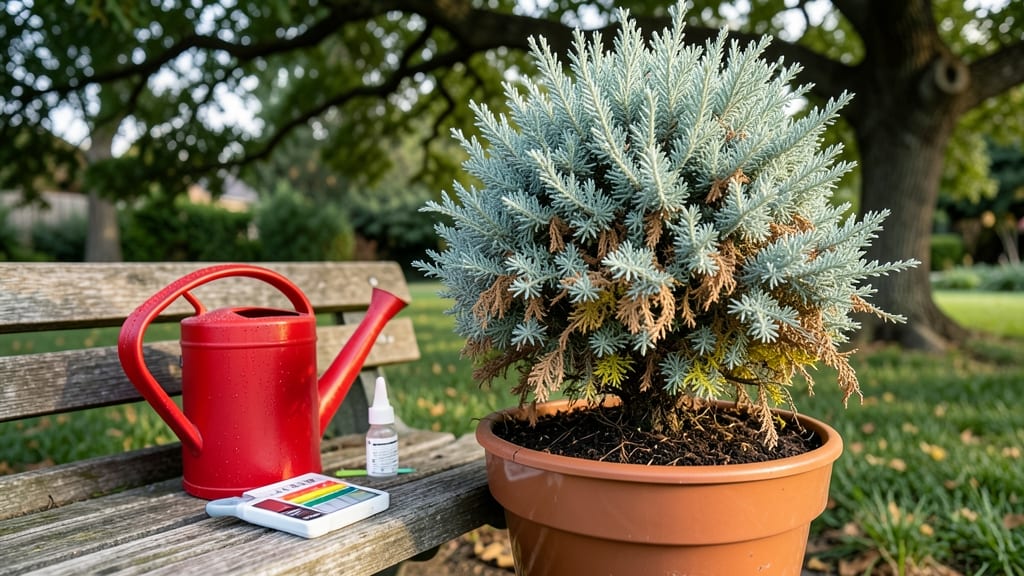
If your potted cypress is turning brown, the issue is almost always water stress (either too much or too little), environmental damage from sun exposure, or pest infestations. Test soil moisture, trim affected branches, and relocate to partial shade immediately to stop further damage.
Brown leaves on potted cypress trees are rarely a death sentence—most cases are fixable with quick adjustments. 🌿 The biggest culprits are inconsistent watering patterns, which cause root stress, and direct afternoon sun that scorches tender needles.
I’ve seen cypress trees bounce back completely within weeks once you address the core issue, whether it’s adjusting your watering schedule or moving the pot to a more sheltered spot.
Here’s the key insight: cypress trees thrive in consistently moist but well-draining soil. If the soil stays soggy for more than a day, roots suffocate, while dry spells trigger nutrient starvation.
Start by sticking your finger 1-2 inches deep—if it’s bone dry, water thoroughly; if it’s damp, hold off until the top layer feels slightly gritty. A simple soil test kit (under $10) can reveal if you’re over- or underwatering.
💡 In This Article
- Root Causes of Brown Potted Cypress Leaves
- Step-by-Step Fixes for Reviving Browned Potted Cypress
Root causes of brown potted cypress leaves
Brown leaves on potted cypress trees are almost always a cry for help from the roots. When soil stays too dry for extended periods, the tree’s root system struggles to absorb water, triggering a process called osmotic stress.
This happens when the roots can’t pull enough moisture from the soil, causing cells to dehydrate and turn brown. On the flip side, overwatering creates anaerobic conditions that suffocate roots, preventing them from taking up oxygen and nutrients.
In both cases, the tree’s natural defense mechanism kicks in, shedding damaged foliage to conserve energy. 💧
The science gets even more specific with chlorosis, where brown or yellow patches appear due to nutrient deficiencies—often iron or magnesium—caused by poor soil drainage or overly alkaline conditions (pH above 7.0).
Cypress trees prefer slightly acidic soil (pH 5.5-6.5), so if your tap water is hard or you’ve been using lime-based fertilizers, the minerals bind to the soil and become unavailable. You’ll notice this as brown tips on older needles first, then spreading inward.
A simple soil test can confirm if pH imbalance is the culprit.
Environmental factors play a huge role too. Direct afternoon sun (especially in 90°F+ temperatures) can scorch tender needles, causing them to crisp and turn brown within days. The high UV index and heat create oxidative stress, breaking down chlorophyll faster than the tree can replace it.
Even temperature swings—like moving a potted cypress from a cool garage to a hot patio—can shock the system, leading to browning. 🌡️ The key is consistency: cypress trees hate sudden changes in light or temperature.
Pests and fungal infections often fly under the radar but are major contributors. Spider mites, for example, suck sap from the needles, leaving behind a fine webbing and brown speckles that spread rapidly in dry conditions.
Fungal diseases like Phytophthora root rot thrive in soggy soil, causing roots to darken and leaves to wilt before turning brown. The telltale sign? A foul, musty smell at the base of the pot. If you spot these symptoms, act fast—fungicides or neem oil can turn the tide.
Don’t overlook the role of container size. Roots in small pots dry out faster, while oversized containers retain too much moisture. If your cypress has been in the same pot for over 2 years, it’s likely root-bound, which restricts water and nutrient uptake.
The roots may even start circling the pot, strangling themselves. This physical stress manifests as browning along the edges of older needles, a classic sign of restricted growth. 🌱
One final culprit: winter desiccation. Cold winds and indoor heating dry out the air, causing moisture to evaporate from the needles faster than the roots can replenish it. You’ll see this as brown patches on the windward side of the tree.
A simple fix is to group potted cypress with other plants or use a humidity tray with pebbles and water to create a microclimate. Even a light misting in the morning can help prevent winter browning.