Container Gardens
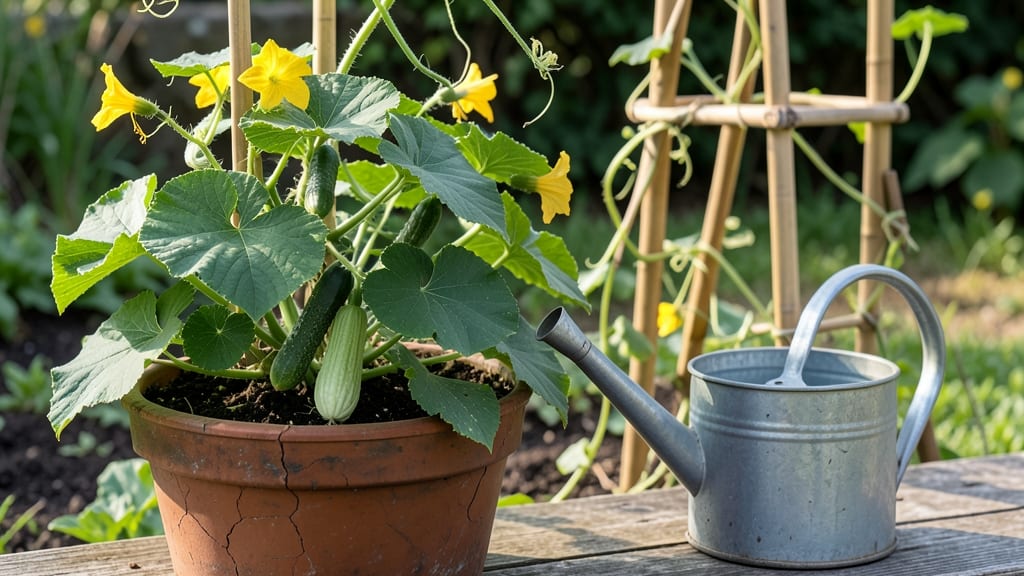
Mastering potted cucumber plant care is simpler than you’d expect—I’ve coaxed 20-pound vines from 5-gallon containers on my balcony, and you can too. 🌱 The key isn’t fancy tools but matching their needs: 5+ hours of sun daily, well-draining soil, and consistent moisture.
Skip the heavy pots—lightweight fabric or plastic works best to keep roots cool.
Start with a 5-gallon minimum container (bigger = more cucumbers), fill it with 50% potting mix + 50% compost, and plant seeds 1 inch deep. Trellis them early—even bush varieties climb—and water at the soil level (never overhead) to prevent mildew.
Fertilize lightly with fish emulsion every 2 weeks once vines hit the trellis.
By mid-summer, you’ll be harvesting crisp, vine-ripened cucumbers straight from your porch. The secret? Prune aggressively—pinch off flowers if vines look stressed, and harvest every 2 days to keep production going. Even in small spaces, a single pot can feed you all season.
Watch for powdery mildew (spray with neem oil) or squash bugs (handpick eggs). If leaves yellow, flush the soil with water—salt buildup is the #1 killer of potted cucumbers. With these tweaks, your container cucumbers will outperform any store-bought bunch.
📚 In This Guide
- What you need
- Instructions
- Tips and common mistakes
- Wrapping up and next steps
What you need
- ● Container: A 5-gallon pot or larger (at least 12 inches deep) with drainage holes. Terracotta or fabric pots work best.
- ● Potting Mix: A high-quality, well-draining mix (e.g., 60% potting soil + 40% perlite or coco coir). Avoid garden soil—it compacts too easily!
- ● Cucumber Seeds or Seedlings: Seeds: 2–3 parthenocarpic (self-pollinating) varieties like ‘Bush Champion’ or ‘Spacemaster’ (great for pots!).
- ● Seedlings: 1 healthy plant (transplant after last frost).
- ● Fertilizer: A balanced, water-soluble fertilizer (10-10-10) or compost for organic growth.
- ● Support Structure: Trellis or cage: A 5–6 ft tall metal or wooden trellis (cucumbers climb to save space!).
- ● Twine or soft ties: For securing vines (avoid plastic—it can damage stems).
- ● Watering Can or Hose: With a gentle spray nozzle to avoid disturbing soil.
- ● Pruning Shears: Small, sharp scissors for trimming.
- ● Mulch: Straw or shredded leaves to retain moisture.
- ● Slow-Release Fertilizer Pellets: Mix into soil for steady nutrition.
- ● Grow Lights: If indoors, a full-spectrum LED (12–16 hrs/day).
- ● Pest Control: Neem oil or insecticidal soap (for aphids/spider mites).
- ● Harvest Basket: A cute little basket to collect your cucumbers! 🥒
Step-by-step instructions for thriving potted cucumber plants
Here's how to keep your cucumbers happy in containers—no sprawling vines or bitter fruit.
🪴 Step 1: Select the Right Container and Soil Mix
Cucumbers need room to stretch, so choose a container at least 12-14 inches deep with drainage holes. I use fabric grow bags because they allow roots to breathe while preventing waterlogging. Fill the pot with a lightweight mix of 50% potting soil and 50% compost—this gives roots both aeration and nutrients.
Tap the pot gently to settle the mix, then water it thoroughly until moisture runs freely from the drainage holes. This pre-moistening prevents transplant shock later. Cucumbers hate soggy roots, so if your mix feels compacted, add a handful of perlite to improve drainage.
☀️ Step 2: Position for Maximum Sunlight and Support
Place your potted cucumber in a spot that gets 6-8 hours of direct sunlight daily. A south-facing window or balcony works, but if you're using artificial light, supplement with a full-spectrum LED grow light for 14-16 hours per day. Leggy vines with pale leaves mean your plant isn't getting enough light—adjust immediately.
Install a trellis or sturdy cage right after planting. Cucumbers are aggressive climbers, and supporting them early prevents tangled vines and broken stems. I like spiral trellises because they guide vines upward naturally, reducing the risk of disease from touching the ground.
💧 Step 3: Water Deeply and Maintain Consistent Moisture
Cucumbers need 1-2 inches of water per week, but they're thirsty plants—water when the top inch of soil feels dry to the touch. I water deeply in the morning, aiming for the soil, not the leaves, to avoid fungal issues. Overhead watering can spread mildew, so use a watering can with a narrow spout or drip irrigation.
Mulch the soil surface with 1-2 inches of straw or shredded leaves to retain moisture and keep roots cool. This is especially important in containers, where soil dries out faster. You'll notice fruit turning bitter or developing a tough skin if the plant isn't getting enough water consistently.
✂️ Step 4: Prune and Fertilize for Bountiful Harvests
Pinch off the first few flowers that appear to encourage stronger vine growth. Once the plant is established, allow flowers to develop but remove any that appear on the main stem below the first 6 inches—this redirects energy to fruit production higher up. I also prune any yellow or diseased leaves immediately to prevent spreading.
Feed your potted cucumber every 2-3 weeks with a balanced liquid fertilizer (like 10-10-10) diluted to half strength. Too much nitrogen leads to lush foliage but few fruits, so focus on a fertilizer with equal parts nitrogen, phosphorus, and potassium. Stop fertilizing once flowers appear to avoid bitter-tasting fruit.
🌿 Step 5: Monitor for Pests and Adjust as Needed
Check the undersides of leaves weekly for aphids, spider mites, or cucumber beetles. These pests love cucumbers and can devastate a plant quickly. If you spot them, blast them off with a strong stream of water or use neem oil as a natural deterrent. I find that a 1% neem oil solution sprayed in the evening works best—it's gentle on plants but tough on pests.
Watch for signs of overwatering, like yellowing leaves or mushy stems, and adjust your watering schedule. In hot weather, you may need to water daily, while cooler months might only require watering every 3-4 days. The key is to keep the soil consistently moist but never waterlogged.
Tips & tricks for perfect potted cucumber care
Common mistakes can turn your container garden into a bitter disappointment—here's how to avoid them while maximizing your cucumber's potential.
Container Depth Matters: That 12-14 inch minimum depth isn't just a suggestion—cucumbers develop deep root systems. If you're using smaller pots, consider planting just one cucumber per container rather than squeezing in multiple plants. I've seen vines literally outgrow their containers, leading to stunted growth and poor fruit production. For extra insurance, add a handful of coarse sand to the bottom 2 inches of your soil mix to improve drainage and root development.
Light is Non-Negotiable: The 6-8 hours of sunlight requirement is critical, but here's what nobody tells you—morning sun is more valuable than afternoon sun. Position your container to catch those early rays when temperatures are cooler. If you're using artificial light, place the grow light just 6-12 inches above the plant and adjust as the vine grows. I've had cucumbers bolt (flower prematurely) when they get inconsistent light, resulting in bitter fruit.
Watering Wisdom: The top inch dry test works, but here's the pro move: use your finger to check moisture at both the surface and 2-3 inches down. Containers dry out unevenly, and you'll often find dry topsoil while the lower soil stays moist. For even more consistency, consider installing a self-watering reservoir at the bottom of your container—just make sure it has a float valve to prevent overwatering. This is especially helpful if you travel frequently.
Pruning Strategy: When you pinch those early flowers, don't just snip and toss them. Place them in a glass of water—they'll root and become new plants! For the 6-inch rule on lower stem flowers, think of it as creating a "fruit zone" where all your energy goes to producing cucumbers. I've seen plants with 20+ cucumbers when I followed this rule strictly, versus just 5-6 when I ignored it. Also, always use clean, sharp pruners to prevent disease transmission.
Pro Tips for Potted Cucumber Plant Care
- Common mistakes can turn your container garden into a bitter disappointment—here's how to avoid them while maximizing...
- Container Depth Matters: That 12-14 inch minimum depth isn't just a suggestion—cucumbers develop deep root systems. I...
- Light is Non-Negotiable: The 6-8 hours of sunlight requirement is critical, but here's what nobody tells you—morning ...
Frequently asked questions
Got questions about keeping your potted cucumbers happy? You’re not alone—here are the answers to the most common concerns from gardeners just like you! Whether you’re troubleshooting wilting leaves or wondering about space-saving tricks, we’ve got you covered.
How often should I water my potted cucumber plant?
Cucumbers thrive on consistent moisture—aim for 1–1.5 inches of water per week, adjusting for heat or dry soil. Check the top inch of soil daily: if it’s dry, water deeply until it drains from the bottom. Pro tip: Use a moisture meter or stick your finger in to avoid over- or under-watering.
When is the best time to harvest cucumbers from a potted plant?
Harvest when cucumbers are 6–8 inches long and firm to the touch (or smaller for "baby" varieties). Use sharp scissors or pruners to avoid damaging the vine, and pick every 2–3 days to encourage more production. Warning: Overripe cucumbers turn seedy and bitter—don’t let them linger!
Can I grow cucumbers in a small pot, or do they need a lot of space?
Cucumbers are vining powerhouses, but you can grow them in pots as small as 5 gallons (for bush varieties) or 10+ gallons for trailing types. Use a trellis or cage to save space and improve air circulation. Space-saving hack: Try compact varieties like ‘Bush Champion’ or ‘Spacemaster.’
Why are my potted cucumber leaves turning yellow?
Yellow leaves usually signal overwatering, nutrient deficiency, or pests. Check the soil—it should dry slightly between waterings. Fix it: Adjust watering, add a balanced fertilizer (like 10-10-10), or inspect for aphids/spider mites. Preventative tip: Mulch with straw to retain moisture and deter pests.
Do potted cucumbers need full sun, or can they tolerate partial shade?
Cucumbers love 6–8 hours of direct sunlight daily, but they’ll tolerate 4–6 hours in partial shade (though yields may drop). In hot climates, afternoon shade can prevent stress. Shade hack: Place pots in morning sun and move them to shade by midday.
Can I grow other vegetables alongside cucumbers in the same pot?
Yes! Cucumbers pair well with companion plants like bush beans, radishes, or lettuce (they use different soil layers). Avoid planting with potatoes or sage—these can stunt growth. Container combo: Try a "three sisters" mix: cucumbers, beans, and corn (if space allows).
Wrapping up and next steps
Caring for a potted cucumber plant is a rewarding journey that brings fresh, homegrown veggies to your doorstep—literally! With the right container, sunlight, and a little TLC, you’ll enjoy thriving vines and bountiful harvests. Remember, consistency is key: water wisely, prune regularly, and watch your plant flourish.
Now that you’re armed with expert tips, it’s time to roll up your sleeves and get growing! 🌱 Start by picking your favorite cucumber variety, grab your supplies, and let your green thumb shine. Happy gardening—and may your harvest be plentiful! Ready to plant? Check out our step-by-step guide here.