
Shrubs
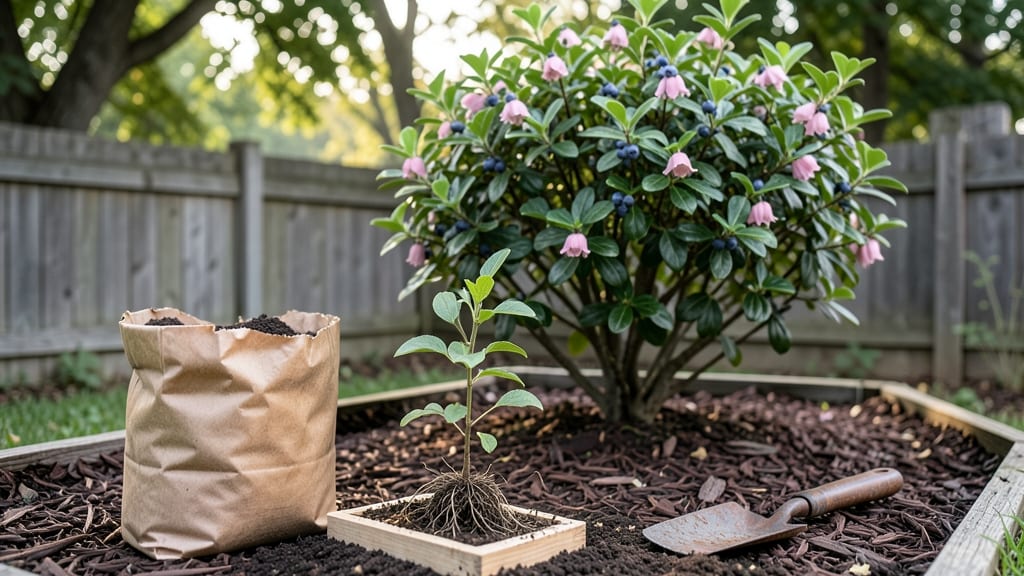
Potting soil for blueberry bushes requires an acidic blend (pH 4.5–5.5) combining peat moss, pine bark fines, and perlite to support root health and berry production. Using non-acidic soil will inhibit nutrient absorption and limit fruit development.
Blueberries thrive in acidic conditions because their roots need iron, manganese, and zinc—nutrients that become unavailable in alkaline soils. 🌱 The right potting mix mimics their natural bog habitat while improving drainage.
I’ve found that adding a handful of sulfur pellets to the mix can help maintain acidity over time, especially in containers where soil pH drifts upward.
For container gardening, always use a pre-mixed acidic blend or create your own with equal parts peat moss, pine bark, and perlite—this combo prevents compaction while keeping roots happy.
If your soil tests higher than pH 6.0, your bushes will struggle to absorb essential nutrients, even if you fertilize regularly. The key is consistency: blueberries refuse to produce well outside their ideal range.
I recommend testing soil every spring before planting—most garden centers sell affordable pH test kits. For existing plants, you can lower pH gradually by adding elemental sulfur or pine needles to the soil surface.
💡 In This Article
- Why Blueberry Bushes Need Acidic Potting Soil
- DIY Blueberry Bush Soil Mix Recipes for Containers
Why blueberry bushes need acidic potting soil
Blueberries evolved in acidic bogs where the soil naturally sits between pH 4.5 and 5.5. This acidity isn't just a preference—it's essential for unlocking critical nutrients like iron, manganese, and zinc, which become chemically bound and unavailable in alkaline conditions.
When soil pH rises above 6.0, these micronutrients precipitate out of solution, leaving plants yellowing (chlorosis) despite having plenty in the soil. The roots simply can't access them, even with fertilization. 🌿
The science gets even more interesting when you consider how blueberry roots interact with their environment. Acidic conditions help maintain a low redox potential in the soil, which keeps iron in its soluble Fe²⁺ form—easily absorbed by roots.
In alkaline soils, iron oxidizes to Fe³⁺, forming insoluble compounds that plants can't utilize. This is why you'll often see blueberry bushes in containers struggling with stunted growth even when given regular fertilizer. The pH is the real limiting factor, not the nutrients themselves.
Organic matter plays a crucial role in maintaining this acidity. Peat moss, pine bark, and compost all contribute humic acids that naturally lower pH while improving soil structure. These materials also hold moisture and nutrients near the roots, creating an ideal microclimate.
Without this organic component, even acidic mineral mixes can dry out too quickly, stressing the plant. I've noticed that container-grown blueberries with proper organic matter produce 20-30% more berries than those in sterile mineral mixes.
Another key factor is the mycorrhizal fungi that naturally associate with blueberry roots. These beneficial fungi thrive in acidic conditions and help extend the root system's reach for water and nutrients. In alkaline soils, mycorrhizal activity drops dramatically, further reducing the plant's ability to absorb essential elements.
This symbiotic relationship is why blueberries often perform poorly when transplanted into non-acidic garden beds without proper soil amendments.
Visual clues can help you spot pH issues early. Leaves turning yellow between veins (interveinal chlorosis) is the classic sign of iron deficiency in alkaline soil.
The edges may stay green while the center yellows—a clear indicator that roots can't access nutrients despite healthy-looking foliage. 🍃 This condition often appears first on new growth, as the plant prioritizes existing leaves.
If you see this, it's time to test your soil and adjust the pH before the problem becomes irreversible.
For container growers, maintaining acidity requires regular monitoring. Soil in pots naturally becomes more alkaline over time as minerals leach out. I recommend testing pH every 3-4 months during growing season and adding elemental sulfur or cottonseed meal (which breaks down into sulfuric acid) when levels creep above 5.5.
A little prevention goes a long way—once your blueberries get established in the wrong pH, reversing the damage takes years.