
Pests
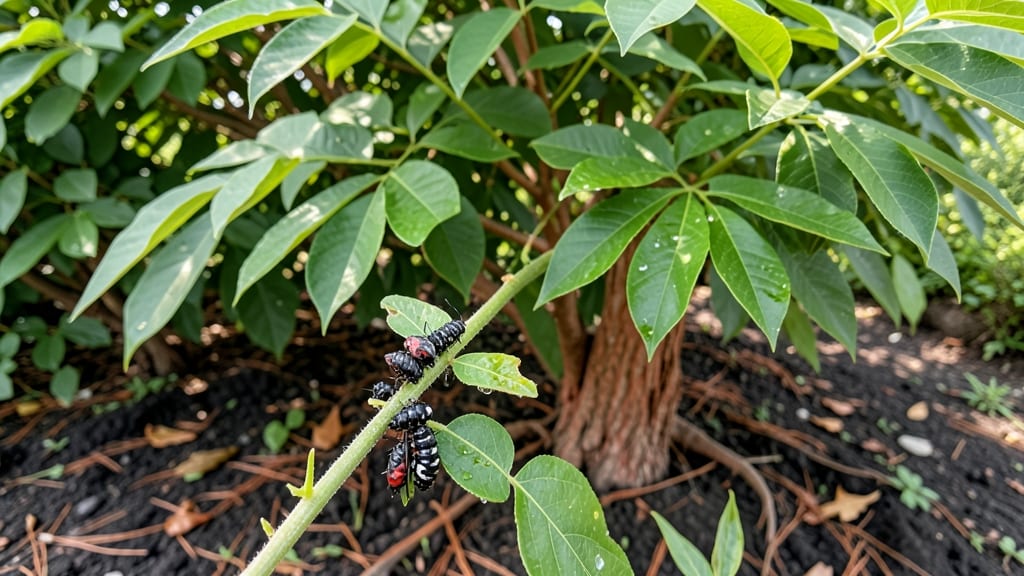
These invasive pests have an insatiable appetite for sap-rich plants, especially those under stress. 🔥 The tree of heaven's toxic compounds actually attract them, creating a deadly cycle where the lanternflies thrive while weakening the tree.
Beyond tree of heaven, they target fruit-bearing plants like grapes and apples, where their feeding leaves behind sticky residue that attracts mold and further stresses the plant.
What makes them particularly dangerous is their ability to jump between hosts—once established in an area, they can devastate entire orchards within just a few seasons.
Identifying their feeding patterns early is key to preventing damage. Look for wilting leaves, oozing sap, and black sooty mold growing on the sticky residue they leave behind. This isn't just about aesthetics—these signs indicate the plant is already compromised, making recovery difficult.
The good news? Proper monitoring and quick intervention can save your garden or orchard from becoming their next buffet.
💡 In This Article
- Spotted Lanternfly Diet: Why Tree of Heaven Is Their Favorite
- High-Risk Plants: Identifying Spotted Lanternfly Targets in Gardens
Spotted lanternfly diet: why tree of heaven is their favorite
Spotted lanternflies have an almost magnetic attraction to tree of heaven (Ailanthus altissima), thanks to its unique chemical cocktail. This invasive tree produces volatile organic compounds (VOCs) like methyl salicylate (the same compound in wintergreen) and allyl isothiocyanate (found in mustard oil), which act as powerful attractants.
These chemicals signal to the lanternflies that the tree is not only a food source but also a safe haven—its toxins actually repel many predators, creating a protective bubble around the tree of heaven.
The sap of tree of heaven contains high levels of water and simple sugars, which provide the perfect nutritional balance for lanternfly larvae and adults. Their specialized piercing-sucking mouthparts can penetrate the bark and extract xylem fluids with surgical precision, leaving behind telltale wounds that ooze sap.
What's fascinating is how the lanternflies target stressed trees first—their mouthparts can detect elevated levels of certain plant hormones like ethylene, which are released when a tree is under environmental stress (drought, poor soil, or damage).
This behavior makes them particularly destructive in urban areas where tree of heaven often thrives as an invasive species.
Here's the biological twist: tree of heaven's toxins, which would normally deter herbivores, actually become a survival advantage for lanternflies. Their digestive systems have evolved to process these compounds, which act as natural pesticides for competing insects.
When a lanternfly feeds on tree of heaven, it's not just getting a meal—it's gaining chemical protection. This mutualistic relationship explains why they prefer this tree over others, even when more nutritious options are available nearby.
The damage doesn't stop with the tree of heaven. Once established in an area, lanternflies will migrate to other hosts like grapes, apples, and maples when their preferred tree becomes depleted. Their mouthparts can penetrate even the tough bark of hardwoods, creating entry points for fungal infections.
The real danger lies in their ability to jump between hosts—what starts as a tree of heaven infestation can quickly become a multi-species agricultural crisis within just a few generations.
Consider this comparison: A single adult lanternfly can lay up to 50,000 eggs in its lifetime, and their nymphs (baby stage) are particularly voracious. While tree of heaven might be their favorite, grapes are their garden-nightmare—vineyards can lose up to 40% of their yield in a single season when infested.
The economic impact alone makes understanding their dietary preferences critical for farmers and home gardeners alike. 🌿
The key takeaway is that tree of heaven isn't just food—it's a launchpad for these invasive pests. Their chemical relationship with this tree creates a vicious cycle where the more tree of heaven grows, the more lanternflies thrive, which in turn increases pressure on nearby crops and ornamental plants.
This ecological domino effect is why early detection and removal of tree of heaven is considered one of the most effective preventive measures against lanternfly infestations.